“… In this way, too, poems are en route; they are headed toward. Toward what? Toward something open, inhabitable, an approachable you, perhaps, an approachable reality.” —Paul Celan, tr.
Cha: An Asian Literary Journal
Cha, founded in 2007, a decade after the handover, is the first Hong Kong international English-language free-access online literary journal; it is dedicated to publishing quality poetry, fiction, creative non-fiction, reviews and photography & art.



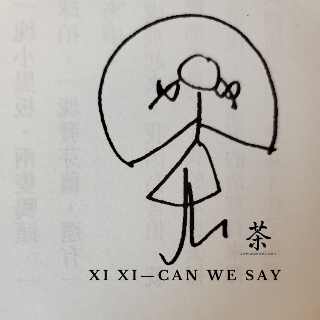
In Ann Hui’s recent documentary Elegies (2023), Xi Xi makes an appearance as one of Hui’s most loved contemporary Hong Kong poets. Wearing a bright red hat that exudes a Paddingtonian charm, Xi Xi talks about her creative inspirations, fondly holding a teddy bear she handcrafted. Though the conversation was originally part of Fruit Chan’s documentary on Xi Xi My City (2015), Hui shrewdly adapts it to commemorate the late writer’s playful seriousness that has long captured us readers, and has since remained close to our hearts.
…


When I get out of bed I thank my bears for having kept me company while I slept. Then at the end of the day, as I go back to bed, I push them gently with my shoulder, to make space for myself and the book I hold in my hands, before I turn off the light and hug the bears again. I don’t know if you like to sleep with bears—I have managed to never have to sleep without at least one. Some of those that stay with me are less used to the uncertainties of travels, or are not so mobile, so we are reunited every time I am in a not-too-temporary home.
…

Translator’s note: Liu connects with Xi Xi’s work in various places in the poem. It starts with the title that is named after a short story by Xi Xi written from the perspective of a cancer patient: the protagonist recounts her own death experience and looks back on her life from her hospital bed. …
In this special feature, Cha presents a compendium of eight essays on a major contemporary poetic work that crosses the boundaries of time and place. This is Richard Berengarten’s Changing (Shearsman Books, UK, 2016), a work of vast symphonic scope, whose main inspiration is the ancient Chinese book of divination and philosophical wisdom, the I Ching, or Classic of Changes
…

This Cha special feature consists of a set of essays on a recent book entitled Changing by the English poet Richard Berengarten (李道, b. London, 1943). This ambitious literary work, which may be read either as a single poem or as a mosaic of poems, is based directly on the I Ching (Classic of Changes) and written in homage to it. Changing has already attracted widespread international attention and commentary from, among others, poets and literary scholars, Sinologists, and I Ching experts.
…

Richard Berengarten’s accomplishment in Changing is too broad, too complex and too intricately detailed to explore satisfactorily in a single essay. There’s just too much to account for. So I intend to narrow my focus here to what I suspect to be the book’s central and possibly deepest concerns, encompassed in Berengarten’s vision of wholeness. …
“Octavio Paz, Allen Ginsberg, Jorge Luis Borges, and Charles Olson, among many others, wrote poems inspired by its poetic language,” writes Eliot Weinberger. “Fritjof Capra in The Tao of Physics used it to explain quantum mechanics and Terence McKenna found that its geometrical patterns mirrored the ‘chemical waves’ produced by hallucinogens. Others considered its binary system of lines a prototype for the computer.” Weinberger is referring, of course, to the I Ching, …

In the Book of Changes, the Chinese classic that was believed to encode all possible contingencies of human existence, the dynamic of ‘revolution’ is addressed by hexagram 49 革 (Ge). The literal meaning of this character is “the hide of an animal”. “In its verbal sense ge (hide) means ‘skin,’ ‘get rid of’ – certainly a radical change”. Ge is also part of the expression 革命 geming, ‘shedding the mandate’. In modern Chinese geming means ‘revolution’.
…

As a metaphor for the power of nature, water appears in different ways in different traditions. It is “the great flood” in the Epic of Gilgamesh of Mesopotamia and the Story of Noah of the Old Testament. It is “a flowing river” in Greek philosophy and in classical Confucianism. It is “a well of water” in the Gospel of St. John and in the I Ching (“In the well there is a clear, cold spring, from which one can drink”). In its various guises, water can be violent and destructive, benign and nurturing, hidden and enriching.
…
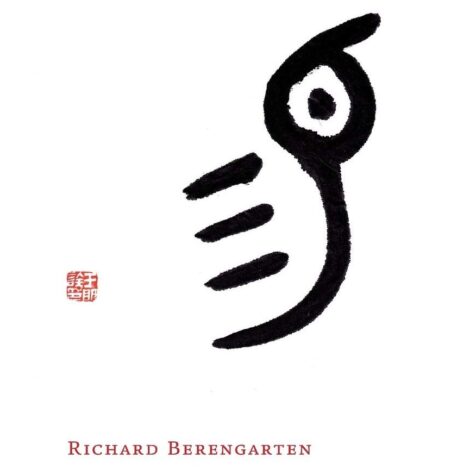
Even a quick and simple glance at the white cover of Richard Berengarten’s Changing is fascinating. Against this background, the ancient pictogram 易 (Yi) is painted in concise strokes of black ink. To me, this pictographic character suggests the form of a bird flying, a suitable connotation for the ever-changing nature of time and space as perceived from within the perspective of the fleeting existence of a human being. …

I Ching consists of layered mythic, shamanic and philosophical statements and concepts, in a corpus of written texts developed over hundreds, perhaps thousands of years. Its original purpose was divination, and it is still an immediately useable working oracle, offering guidance interpretable at many different levels. Richard Berengarten’s long poem, Changing, or “gathering of poems”, as he elegantly calls it (‘Postscript’, 521), is a significant addition to the literature on the Ching, the poem’s main source. This essay tells a story of how some of these new poems have worked to enhance consultations of the old oracle by two of its long-term students.
…


Changing was published in 2016. Between July 2010 and January 2014, during the last three and a half years of its making, I kept a work-journal. In that time, I was processing material that I’d been amassing since 1984, as well some from even before that – editing, reshaping, repositioning, challenging, querying it.
What follows here is the first part of that work-journal, dated July to September 2010.
…