by Anthony Tao
Endanger
“Scholars who don’t research…tourists who don’t sightsee…lovers who aren’t sincere…additionally, foreign spies might pretend to be journalists, consular officers, NGO workers, etc., using various methods to collect national secrets and endanger our country’s security.”
—Chinese Ministry of State Security, May 2025
the cops swung by, marking the foreign musicians
and summoning them later for questioning.
Were you paid? What kind of visa are you on?
Word spread, the message was received.
Foreign acts were swapped out that weekend
(“Playing it safe”), at least one show
cancelled. We anticipate stuff like this,
a venue owner said,
knowing this time things will be fine and
not knowing when things won’t be.
Anyway, there’s a sensitive anniversary coming up.
But shows must go on, so they did.
The Chinese DJ had them swaying, homeostatic
and uninhibited. What was known,
what might ever happen?
The venue felt small, people kept looking at the rafters
as if they were being watched—or that’s just
what I thought. Surely this counts as research.
On the dancefloor, how many were journalists
chasing the ineluctable, how many consular officers
who’d run out of weekend getaways? And more dangerous,
how many were tourists, how many seekers of love?
Paradox, Change
for playing music. All day my brain’s
firing post-rock instrumental riffs
making no sense of it. A military parade
is upcoming, or a rival mid-sized venue
has dialed a hotline. Or the new police chief has,
as they say, started three fires upon taking office.
Meanwhile, the foreign ministry promotes visa-free entry.
I got away with being a cheeky little rocknroller for way too long,
said David, who was deported.
He was sentenced to two weeks and did a month,
maybe because he was American. Maybe
for no reason.
What happened to li, meaning reason—
act within it and morals can be circumstantial,
graft can be forgiven. Crackdowns are lucrative,
but they violate li. They suck. Sometimes
there’s no better word than the word most obvious.
I remember David swaying in Timekeepers with his
waggish grin saying, You’re my kind of people.
They’ve taken much but we’re still here.
He was talking bar closures but I got it, I get it.
Some who have done time stay to tell about it,
how the open windows during summer let in humidity
that overpowers air-conditioning, how rooms fill
beyond capacity, fifteen into a cell with nine wooden beds
pushed together. Every day we are overwhelmed
by ephemera and likewise we’ll all be forgotten
but we had our moments. We had music
like you wouldn’t believe.
Another day, four days before the parade
to commemorate the 80th anniversary of the victory
in the War against Japanese Aggression,
I am heading to Modernista when I hear loud beats
pouring out of a different club into the street,
the words, It’s a love story baby.
I pull open the door and squeeze through black curtains
to a room packed with young Chinese throwing up their hands
and screaming, Save me, they’re trying to tell me how to feel.
And when the singer, who is Chinese, says in English
the next one will be Lady Gaga, a Chinese woman
with Finnish-blonde hair shrieks as if she just learned
about Taylor Swift and Travis Kelce’s engagement.
Two foreigners are watching in the corner,
one of them with arms crossed, straight-faced,
trying not to like it. It’s not bad, I can imagine
one of them finally sighing as the room
belches to the rafters that they want ugly,
they want disease, everything as long as it’s free.
What if it never means more than what it is,
the parties off the rails, the immigration cops
tired of their work, the extra responsibilities,
internal competition, but no way out of it,
all the fiscal audits and fusty traditions and
ordinary remora, all our fraught exultations and
guilty felicities, our charged skittering across
the wires of a political machine powered by money
and relationships, no matter how it churns
or who gets flattened, how it marches on all of us,
even you, no matter how much sense it makes
or doesn’t, how often we rationalize or write
paradox, change?
Anthony Tao: For a while now, China’s security apparatus has been urging vigilance when it comes to interactions with foreigners, posting public service announcements warning against spies and concocting hypothetical scenarios in which journalists, teachers, exchange students, etc., pry for sensitive information vital to national security. It’s amid this backdrop that, in late May, whispers spread about a handful of foreign musicians who had been pulled in for questioning, specifically in regard to their visas. It sent a chill through the community. Was there a campaign against foreigners? Was this the harbinger of a wider crackdown on music? At the same time, it was easy to brush off concerns: music happens every day in Beijing, with foreign musicians being a mainstay. No one had heard of punitive measures for taking the stage. The musicians who perform without performance visas—and that’s most musicians here—do it out of love, often making only enough money to buy a couple of rounds of cocktails.
In China, however, you don’t know where the line is until a cop tells you you’re standing on it. Police arrested one of the owners of a popular music venue and accused him of working without a proper work visa, since he was often behind the bar slinging drinks. He protested that, since he owned the venue—with the papers to prove it—and had been in China for more than a decade without a blemish on his record, what do you mean? Under the pretence that “proper” meant, in this case, a Z visa specifically for the serving of food and beverage, they sentenced him to fifteen days in administrative detention. What they really wanted were the names of foreigners who had played at the venue, and how much they were paid. The owner refused to cooperate. Though, it turns out, that information wasn’t hard to find.
Immigration cops apparently combed through all the flyers the venue had posted on its WeChat account in the month of May, noting the foreign-looking names that had been advertised. Two people I know were detained; one of them was deported. More than a dozen were fined. Some were told they could play in the future if they didn’t take payment, while others were told, “Technically, since your appearance helps the venue’s business, it’s considered illegal work, even if you’re not paid.” For the last four months, foreigners have avoided the stage of this popular venue, and many have stopped taking bookings in other places too.
Why did the cops do this? Here, we must rely on a little speculation. Perhaps the immigration bureau needed to hit a quota, and since foreigners teaching English are harder to find these days, they went after fish in a smaller barrel. Perhaps a new police chief at the local precinct wanted to kick up some dust. Perhaps this music venue had upset the wrong people. None of this was publicised, so it seems unlikely that the authorities were trying to “send a message.” Nonetheless, a message was received.
There’s a contradiction here: while the Ministry of State Security has been warning of foreign spies, the Ministry of Tourism and Ministry of Foreign Affairs have been pleading for foreign tourists to visit, foreign investors to invest, and foreign businesses to return. It would seem inconvenient, I think, for foreigners to learn how vulnerable they are—though, of course, this doesn’t apply solely to foreigners. In China, anyone can be on the right side of the line until one day they suddenly aren’t.
In the meantime, shows go on. That popular music venue fills its event calendar with local acts. Foreign bands play elsewhere, in neighbourhoods where the responsible precinct has bigger things to worry about than the nationality of performers. In Beijing, we know change is the only constant, and that these situations come and go. No one becomes so chilled by every crackdown as to remain frozen. We understand that sometimes, someone will be unlucky enough to get swept away by the change, and sometimes, we’ll ride the swell to a beautiful new height where we’re reminded of the myriad reasons we’ve chosen to live here.
And yet… yet, I’m still bothered by something. Those who were detained—a Colombian who has a newborn in Beijing; the venue owner who contributes to the local economy; David, who speaks fluent Chinese, whose fifteen-year stay in China didn’t deserve to end with deportation—what becomes of their stories? They’ll never be told. China is a big, complicated place, full of delights and dangers, paradox and change, where authorities antagonise foreigners yet people sing along to Taylor Swift, but why can’t we be allowed to say, simply and out loud, that our friends were punished for the most inexplicable of reasons—they were detained for playing music—and how much that sucks?
Published: Tuesday 18 November 2025[RETURN TO WRITE TO POWER]
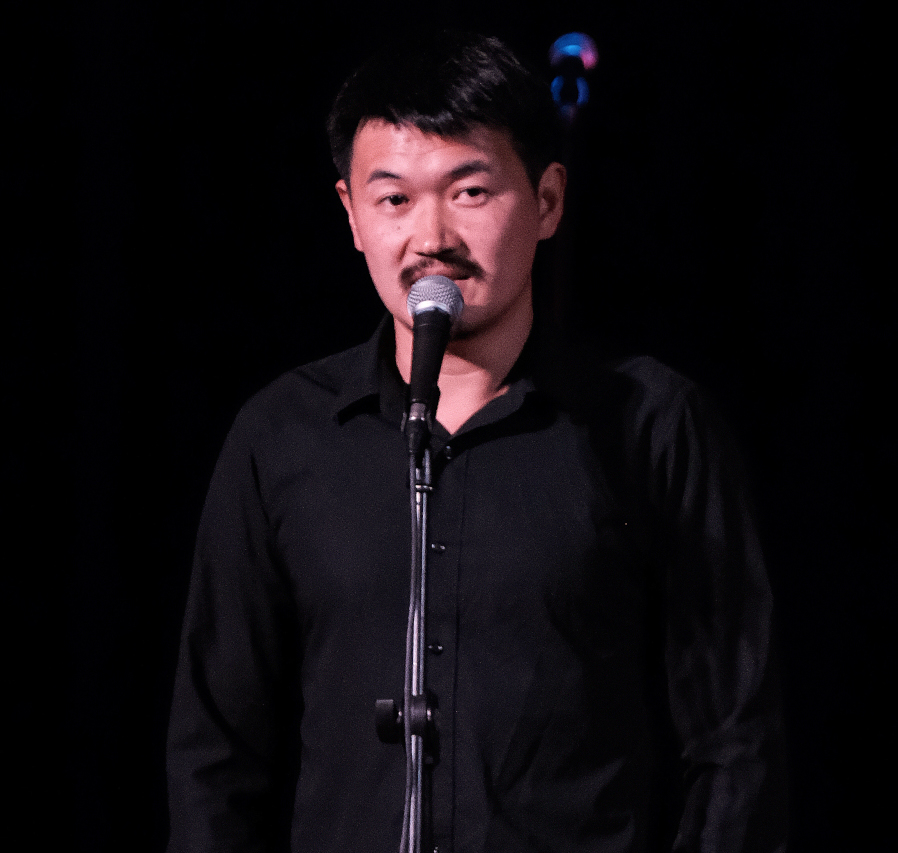

Anthony Tao is the author of the full-length poetry collection We Met in Beijing, whose second edition has just been printed, and is working on a follow-up. His poems have appeared in Prairie Schooner, Borderlands, The Cortland Review, Frontier, Michigan Quarterly Review, Asian Cha, NPR, etc. His poem “Coronavirus in China,” published in Rattle in February 2020, was nominated for a Pushcart Prize. He is co-founder of the band Poetry x Music, combining original poetry with original musical compositions. He is based in Beijing, where he coordinates the literary arts collective Spittoon and hosts its monthly Poetry Night.